
A good dishwasher should clean the dinner plates, dry the plastics, fit awkward pans, and let you forget it is running. We compare the Bosch 800 Series SHP78CM5N with KitchenAid’s KDTS424SPS 360° Max Jets model, two premium machines that tackle those everyday jobs differently.

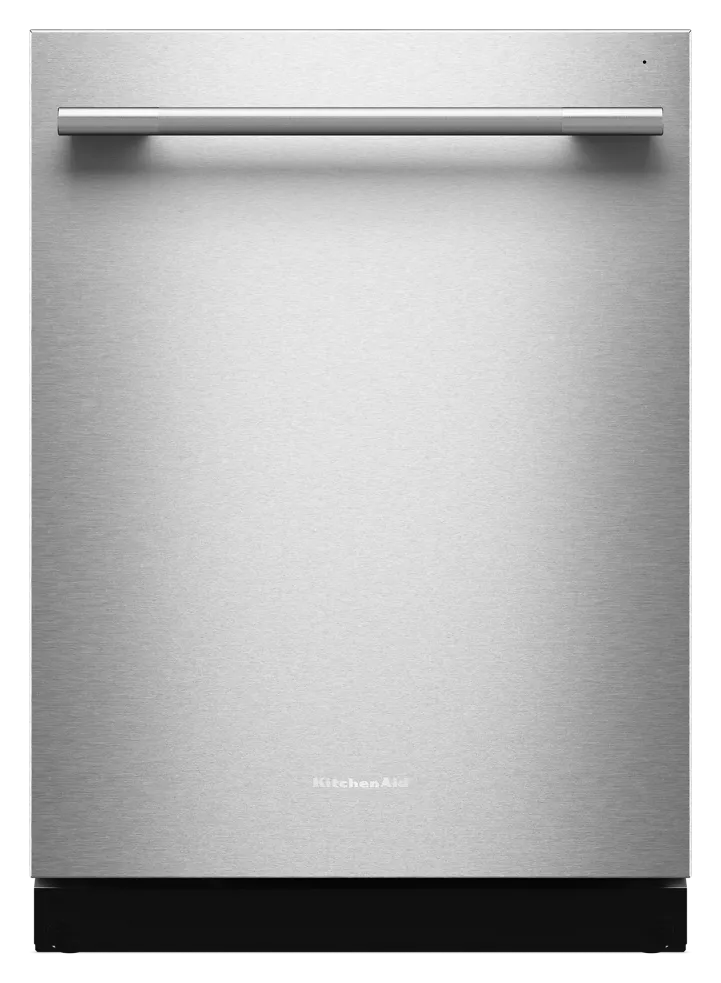
Quick comparison
| What matters | Bosch 800 Series SHP78CM5N | KitchenAid KDTS424SPS |
|---|---|---|
| EverydayRated score | 4.6 / 5 | 4.5 / 5 |
| Typical advertised price range | About $1,300–$1,500 | About $900–$1,350 |
| Published noise rating | 42 dBA | 44 dBA |
| Drying | CrystalDry mineral-assisted system | ProDry plus automatic door release |
| Third rack | Flexible rack for utensils and small items | 360° Max Jets rack designed for glasses, mugs, and bowls |
| Best fit | Quiet kitchens and mixed loads with plastics | Households that want more flexible loading |
Price snapshot checked October 24, 2026. These approximate U.S. advertised ranges are tied to the exact models and can change with retailer, promotion, stock, finish, delivery, installation, haul-away, taxes, and location. They are not guaranteed installed totals. Published noise and efficiency figures are manufacturer or ENERGY STAR data, not EverydayRated lab measurements.
1. Bosch 800 Series SHP78CM5N — Best all-around
EverydayRated score: 4.6 / 5
Bosch’s 800 Series combines a quiet 42 dBA rating with CrystalDry, PrecisionWash, a PowerControl spray arm, and Home Connect monitoring. CrystalDry is its most practical distinction for many kitchens: Bosch designed it to help remove moisture, including from plastic containers and lids that can finish a cycle with water pooled on them. Independent testing from Reviewed also found CrystalDry effective across a mix of materials and shapes. Results still depend on loading and cycle choice.
PowerControl adds targeted wash intensity for selected lower-rack zones, useful when one pot needs more attention than the rest of the load. Bosch lists this model as ENERGY STAR certified, with 240 kWh per year, 688 gallons of annual water use, and capacity for 16 place settings.
What stands out
- Quieter published rating than the KitchenAid.
- CrystalDry is a meaningful advantage for plastic containers.
- Targeted wash zones and a stainless-steel tub.
- Smart monitoring is available, though the app is optional.
What to consider
- Usually sits near the top of this pair’s price range.
- The third rack is useful, but not as deep or cup-friendly as KitchenAid’s.
- Measure the opening and compare installation costs before ordering.
2. KitchenAid KDTS424SPS — Best for flexible loading
EverydayRated score: 4.5 / 5
KitchenAid puts more emphasis on the interior. Its 360° Max Jets third rack is designed to hold glasses, mugs, and bowls as well as utensils. The KDTS424SPS also has 50-plus wash jets across four arms, an adjustable middle rack, folding tines, ProWash soil sensing, and a self-cleaning filtration system.
ProDry uses heat and ventilation, and the door opens about four inches after the cycle to help release steam. That can be convenient if you unload later, but make sure your kitchen layout leaves clearance. The published noise rating is 44 dBA. ENERGY STAR’s listing shows 240 kWh per year and 3.2 gallons per cycle, and lists a maximum capacity of 12 place settings. Capacity figures use different listing conventions, so compare the rack layout in person when possible.
What stands out
- Deep third rack can fit mugs and small bowls.
- Broad wash coverage across all three rack levels.
- Automatic door release and heated drying options.
- Can be a strong value when discounted.
What to consider
- Two decibels higher on paper than the Bosch.
- Check that tall items still fit beneath the third rack.
- Door release needs clearance in front of the machine.
Where the differences matter
Drying
Bosch gets the edge if plastics are a regular part of your loads. KitchenAid’s ProDry and automatic door release offer a flexible alternative, particularly if most of your dishes are ceramic, glass, or stainless steel.
Loading
KitchenAid’s third rack is made to take cups and bowls, not just silverware. That can free space below. Bosch’s rack is useful for utensils and smaller pieces, while its strengths are noise and drying.
Noise
Bosch is rated at 42 dBA and KitchenAid at 44 dBA. Both are designed for quiet operation; Bosch has the lower published rating for kitchens open to living areas or overnight cycles.
Cleaning features
Bosch pairs PrecisionWash sensing with targeted PowerControl. KitchenAid spreads more than 50 jets across four wash arms and uses soil sensing for its ProWash cycle. Those designs are not enough on their own to prove one cleans every load better. Scrape large food scraps and follow each manual’s loading instructions.
How we scored them
Scores are EverydayRated editorial judgments based on published specifications, independent testing coverage, usability tradeoffs, and the price ranges above. We did not conduct side-by-side lab or in-home testing. The same criteria were used for both models.
| Category | Weight | Bosch | KitchenAid |
|---|---|---|---|
| Cleaning system and cycle flexibility | 30% | 4.6 | 4.5 |
| Drying performance and options | 25% | 4.8 | 4.4 |
| Noise | 15% | 4.8 | 4.5 |
| Rack design and usability | 15% | 4.3 | 4.8 |
| Efficiency and value | 15% | 4.3 | 4.6 |
| Overall | 100% | 4.6 / 5 | 4.5 / 5 |
Which dishwasher should you buy?
Choose the Bosch 800 Series SHP78CM5N if you want the quieter published rating and better support for drying plastics. It is the balanced pick for many households, though it tends to cost more.
Choose the KitchenAid KDTS424SPS if its deep third rack suits the cups, bowls, and utensils you wash most often. It becomes especially attractive near the bottom of its typical price range.
Before ordering, measure the opening, check door and handle clearance, confirm water and electrical connections, and compare delivery, installation, and haul-away costs. A 24-inch label does not guarantee a perfect fit.
Frequently asked questions
Which one is quieter?
Bosch rates the SHP78CM5N at 42 dBA; KitchenAid rates the KDTS424SPS at 44 dBA. Actual sound depends on installation and the room.
Which dries plastic better?
Bosch’s CrystalDry system is specifically designed to improve drying, including plastics, and independent testing has highlighted that strength. KitchenAid offers ProDry and automatic door release.
Does the KitchenAid third rack hold cups?
Yes. KitchenAid designed its 360° Max Jets rack for glasses, mugs, bowls, and utensils. Check the layout in person if you often load tall items.
Are both ENERGY STAR certified?
Yes. Bosch lists the SHP78CM5N as certified, and ENERGY STAR’s product listing also certifies the KitchenAid KDTS424SPS family.
Sources & research
- Bosch product specifications
- KitchenAid product details
- ENERGY STAR: KitchenAid KDTS424SPS
- ENERGY STAR: Bosch SHP78CM5N
- Reviewed: Bosch 800 Series test review
- Consumer Reports: Bosch test page and KitchenAid test page
- Bosch retailer listing and KitchenAid retailer listing. Prices and availability vary.
EverydayRated™ — Rated for Real People. Product details and availability can change; verify the model number before purchase.